
Nauset Lighthouse

Behind the Lens at the Iconic Nauset Lighthouse


Introduction


Nauset Beach Light

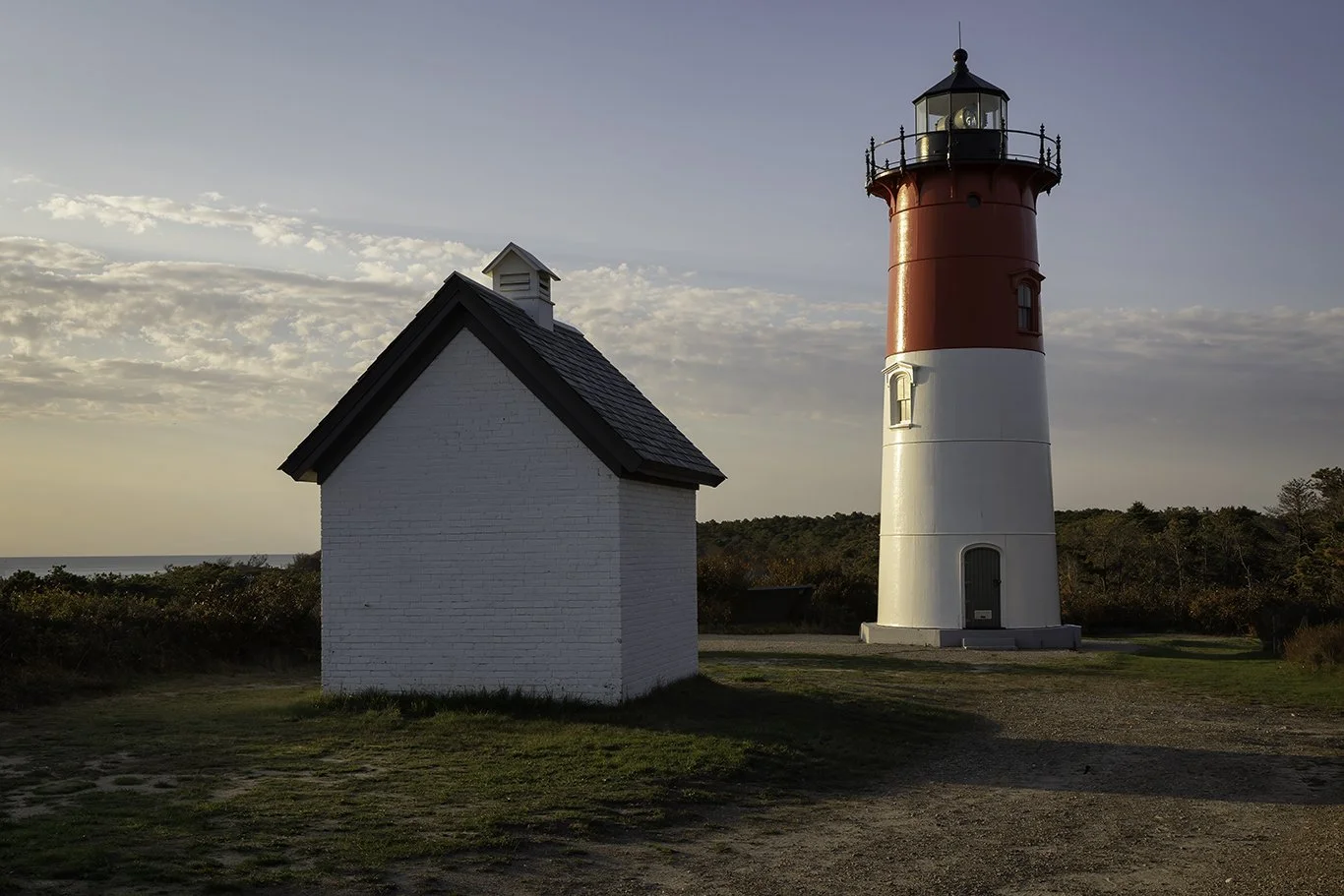
I like photographing lighthouses! On a recent trip to Cape Cod, MA, I visited the beautiful Nauset Beach Light on the Cape Cod National Seashore in Eastham. A bold red-and-white tower, it sits on a hill for maximum visibility. I captured the lighthouse in the early-morning light, then returned for a tour of the interior, which was very cool.

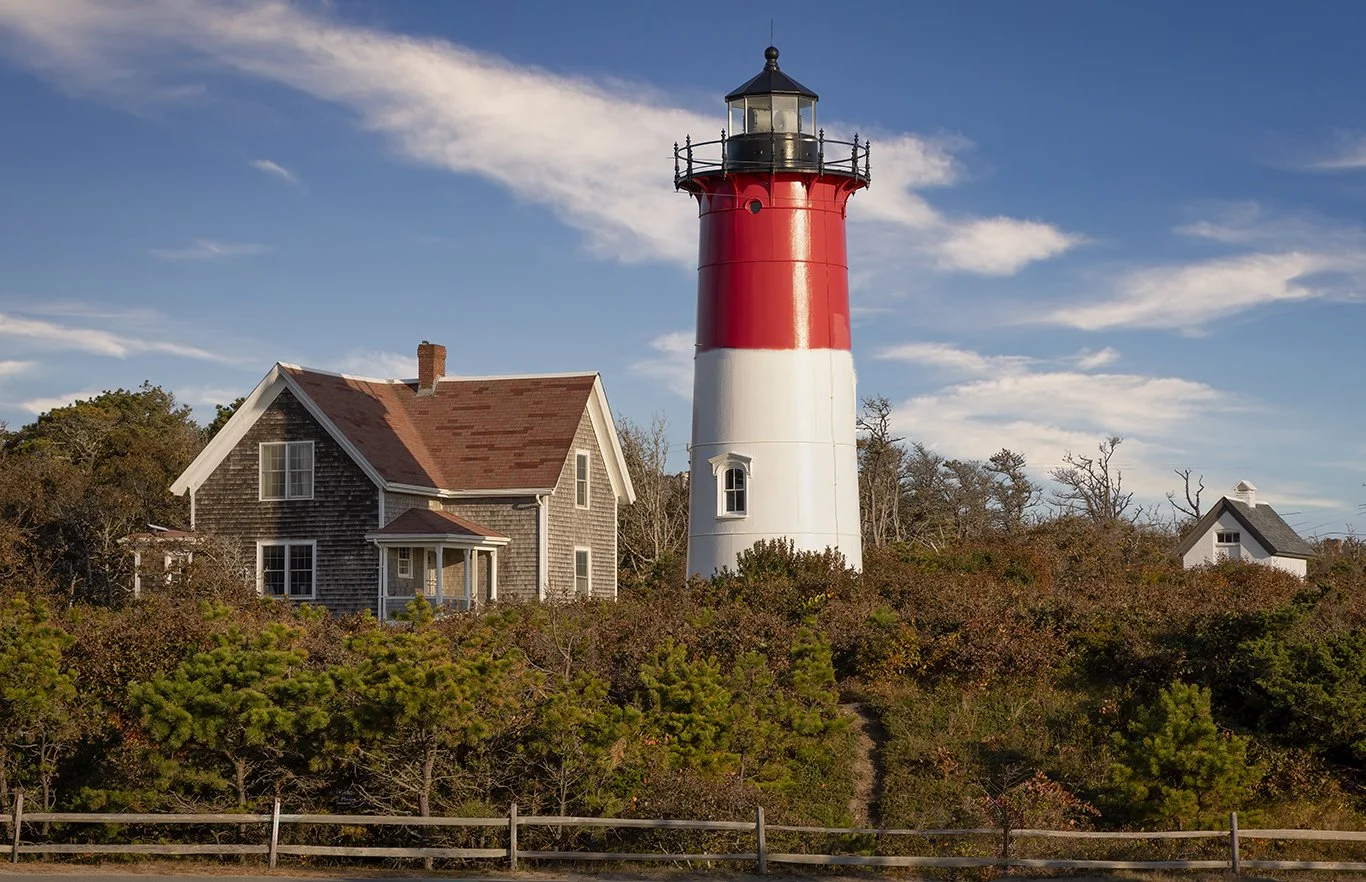
Originally built in 1877, the tower was moved to its current location in 1923 and is listed on the National Register of Historic Places. The tower's exterior is a cast-iron plate shell lined with brick, standing 48 feet tall. An adjacent brick oil house has been restored. The lightkeeper’s home is adjacent to this.


History
 

Nauset Beach Light

The Nauset Light was originally built in 1877 as one of two towers in Chatham. It was moved to its current location in 1923 to replace the Three Sisters of Nauset. The Three Sisters were three small wooden lighthouses relocated 1000 feet west of the Nauset Light. The original Nauset Light was uniformly white, but the top section was painted red in the 1940s, giving the tower its iconic appearance.


In 1981, the Light’s Fresnel lens was removed and replaced with aerobeacons. These bulbs were later replaced with 400-watt metal halide bulbs.


Coastal Erosion


By the 1990s, the Nauset Light was less than 50 feet from the edge of a 70-foot cliff due to coastal erosion. When the Coast Guard considered decommissioning the lighthouse, a strong public outcry followed, prompting the formation of the Nauset Light Preservation Society. As a result, the society arranged to relocate the tower and brick oil house to a safer location.


The Interior
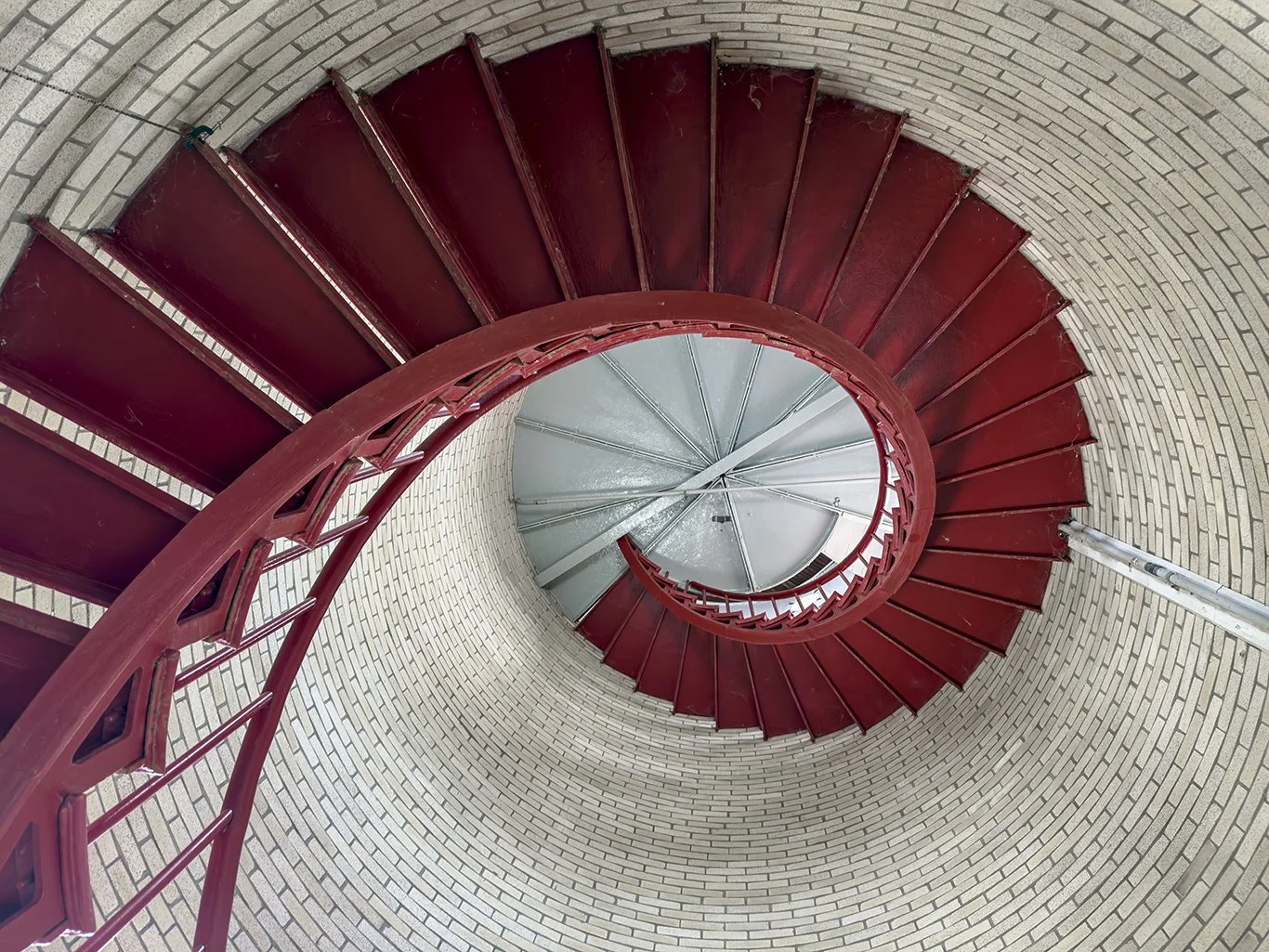
 

With a group of photographers, we were given access to the lighthouse’s interior. Never having been in a lighthouse before, I found what I saw very interesting. As I stepped in and looked up, I saw a spiral staircase extending to the top. I repeatedly tried to get a good photograph looking up from the ground floor with my mirrorless camera. That did not work very well, so I eventually switched to shooting with my iPhone, which came out better.


Conclusion


The Nauset Light is a quintessential symbol of Cape Cod. It stands as a testament to the region's maritime heritage, guiding sailors with its distinctive red-and-white tower. If you are planning a trip to Cape Cod, visiting the Nauset Light offers a unique opportunity to step back in time and experience a piece of Cape Cod’s nautical history.

The Nauset Lighthouse in Early Morning Light

It’s 6:00 AM this mid-October morning, and Bob, my fellow outdoor photographer, picks me up at home. Today, we are venturing out in the dark to capture the best light at the Nauset Lighthouse. This trip to Wellfleet, Cape Cod, will take about an hour, but photographing this iconic structure at sunrise will be well worth it.

We park the car just as the sun peeks from the horizon. The Lighthouse is the first thing that comes into view in all its glory. In addition to the allure of its presence at the top of a moderately steep hill, this red and white monolith looks out over the ocean, a serene site to behold.

Built in 1838, the Nauset Lighthouse has stood sentinel over the Cape Cod coastline for nearly two centuries. Originally constructed to guide mariners safely past the treacherous waters, the lighthouse has grown to embody the region’s spirit. However, the story of Nauset Lighthouse is not simply one of standing tall against stormy seas; it’s also about resilience and preservation.

The coastline has been steadily eroding, and the lighthouse faced the threat of being washed away. In a monumental relocation effort, Nauset Lighthouse was moved 1500 feet inland in 1996. This engineering feat preserved the historic structure and ensured it would continue to serve as a navigational maritime traffic beacon.

With its iconic red and white color scheme, adopted in 1955, Nauset Lighthouse has become an emblematic symbol of the Cape Cod landscape. Today, the lighthouse, operating with its original third-order Fresnel lens, glows brightly for mariners, visible from approximately 13 nautical miles. Furthermore, its listing on the National Register of Historic Places underscores its significance as a lighthouse and a piece of American maritime heritage.

While standing before the Nauset Lighthouse, I couldn’t help but feel a sense of connection to the tales of those who lived and and worked here. Local lore speaks of the “ghost” of a former lighthouse keeper who is said to roam the grounds, perhaps keeping watch over the seas he once guarded. Whether accurate or simply the result of an overactive imagination, these stories deepen the lighthouse’s charisma and charm.

Nauset Lighthouse has certainly weathered its fair share of storms, literally and figuratively. During fierce winter storms, waves crash dramatically against the cliffs, often sending sprays of water up toward the lighthouse. Photographers over the years have captured these explosive moments, as the juxtaposition of nature’s fury with the steadfast lighthouse creates breathtaking imagery.

The reach of Nauset Lighthouse extends far beyond its physical location. It has appeared in various films, artwork and photography. The lighthouse has been part of Cape Cod’s cinematic landscape in films such as The Finest Hours, which depicts the bravery of the Coast Guard during treacherous rescues.

Nauset’s picturesque setting has long enamored artists and photographers. As depicted in the this post, many famous paintings and photographs showcase the lighthouse, especially during the golden hours of sunrise and sunset. Its striking silhouette against vibrant skies serves as an enduring image of the Cape.

One intriguing aspect of lighthouse lore is the Great Lighthouse Debate, which stems from Edward Hopper’s famous painting Nighthawks. Some enthusiasts speculate whether the emotional ambiance of Hopper’s diners was inspired by the isolation often associated with lighthouse life. This debate adds another layer to the connections between lighthouses and American art and culture.

As I wander around the base of Nauset Lighthouse, I reflect on the lives of lighthouse keepers and their families. These guardians of the sea lived in relative isolation, dedicated to the upkeep of the light and often dealing with the challenges of culinary and domestic life amidst the unpredictable weather. Many local accounts describe the close-knit communities formed around these lighthouses, creating a unique culture centered on maritime traditions.

At this point, the good light for photography is gone, and it is time to travel a short distance to the Mass Audubon Wellfleet Bay Wildlife Sanctuary for bird photography. The hope is that many of the migratory birds have not yet left for the season. It’s windy today, which could also hinder our chances for getting good bird photographs. Nevertheless, as long as we’re here, it’s certainly worth a try. Not to worry; if no luck, I know I’ll be back here in the future.