

In 2026, I continued my quest to visit as many of the US national parks as possible before I die. I had the opportunity to join a group of photographers in Death Valley, where I spent five days traveling, hiking, camping, and photographing in the largest park in the contiguous United States.
Death Valley is the hottest, driest, and lowest of all national parks in the US. Straddling the California-Nevada border, it features an incredibly diverse landscape of dunes, valleys, canyons, and mountains. Over five days, we traveled from the basin’s salt flats to high overlooks, across badlands, and into a cool spring oasis. The park is a study in contrast, from the lowest to the highest, from bone-dry playa to secret water, and from raw geology to human stories. UNESCO included this landmass in its Mojave and Colorado Deserts Biosphere Reserve in 1984.
The Devil’s Golf Course
We knew that winter rains had caused a superbloom in the park this year. This rare, once-a-decade event is driven by heavy winter rain. The desert floor is transformed into carpets of yellow, purple, and white wildflowers. With this in mind, our first stop was at the Devil’s Golf Course.
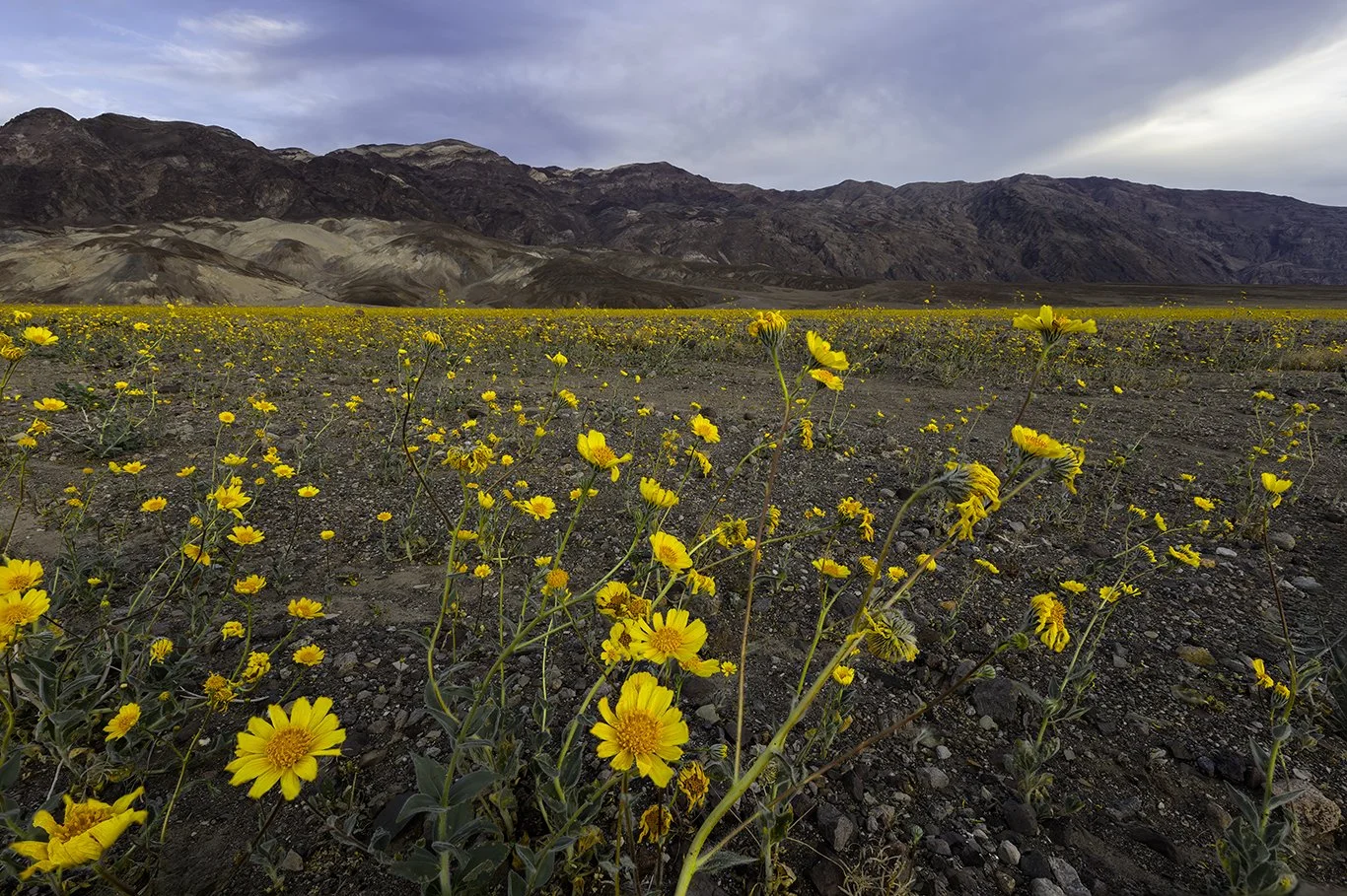
Situated between Furnace Creek and Badwater Basin, this expansive, rugged salt pan features jagged, knee-high halite salt-crystal formations. The area is so named because it’s believed only the devil could play golf on its rough surface.
As we approached this area, the first thing we saw was a tapestry of Desert Gold. Also known as desert sunflowers, these bright yellow, daisy-like flowers are abundant and blanket the valley floor.
Badwater Basin
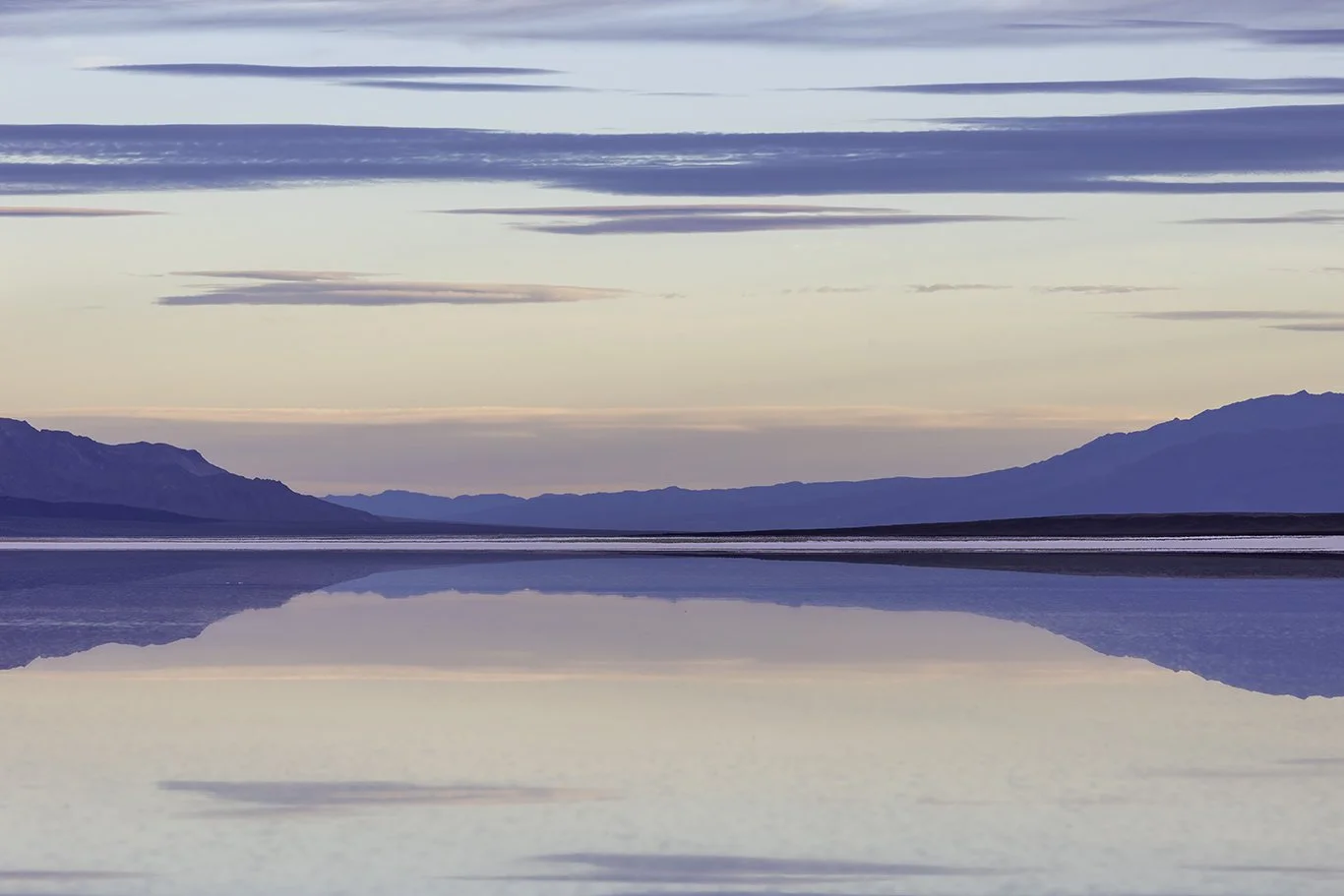
It’s very early in the predawn hours when my alarm goes off, and I have a cup of coffee in my hotel room. The goal for this morning is to photograph the Badwater Basin, the lowest point in North America, at 282 feet below sea level. This is a large, flat playa with a broad, nearly level lakebed that spans several miles. Fine sediments accumulate on the surface of the playa, where polygonal salt-crust patterns form in ridges of desiccated mud. Having anticipated the type of terrain we would be trudging through, I wore mud boots over my hiking shoes, and I was glad I did.
The topography and geology of this area are amazing. The playa is framed by steep alluvial fans, with the Panamint Range to the west. This creates dramatic vertical contrasts that offer strong compositional opportunities.
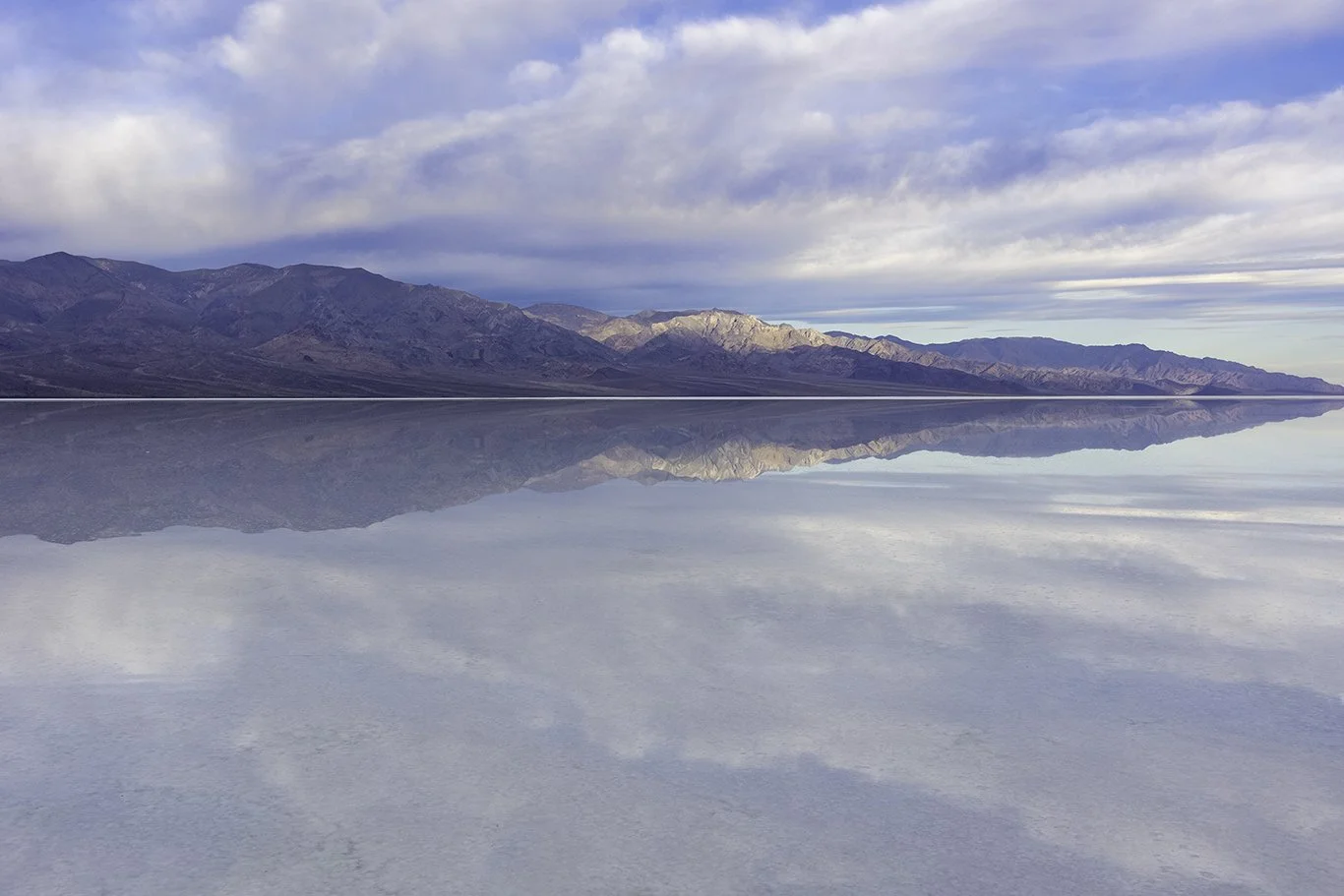
The way the playa forms involves ephemeral lake dynamics. In wetter periods or following storms, runoff and subsurface flow collect in the basin, forming shallow, temporary pools. The water evaporates rapidly in this hyper-arid climate, leaving behind dissolved salts and minerals. With repeated wetting and evaporation cycles, halite salts become concentrated, and as the surface dries, it cracks into hexagonal salt polygons that range from a few inches to a foot or more across. As multiple layers of crust are laid down in cycles over time, a thick playa sequence is formed.
As 8:30 AM approaches, we are starting to lose the light. Also, numerous tourists are starting to arrive in droves. It is time to go for breakfast.
Zabriske Point
It is time to head to Zabriske Point for our afternoon shoot. This is one of Death Valley’s most iconic overlooks. It is a compact badlands area with sharply eroded, colorful clay and silt layers, offering sweeping views across Furnace Creek and the valley floor.
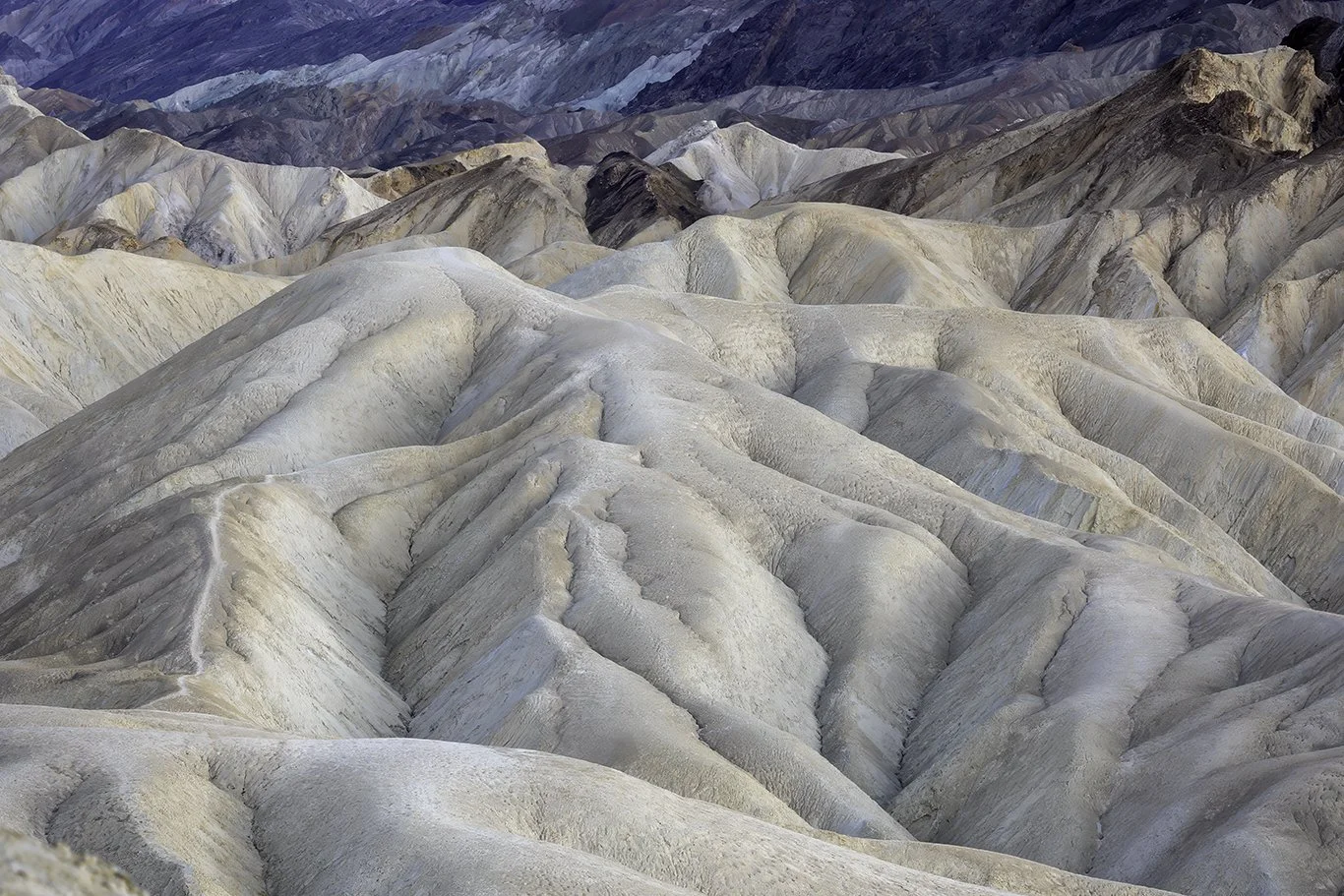
This site gained notoriety among tourists and photographers after the 1970 movie Zabriske Point was released. It was named for Christian Brevoort Zabriskie, vice president of the Pacific Coast Borax Company in the late 19th and early 20th centuries. The company and Borax mining helped shape early Euro-American activity in the area through the use of 20-mule teams and the Harmony Borax Works. The name stuck in local and park usage.
As we set up our tripods and cameras, the badland morphology reveals steep, dissected ridges, gullies, and narrow benches carved by episodic water erosion in fine-grained sediments. The result is a topography that appears sinuous, with abundant small-scale texture.
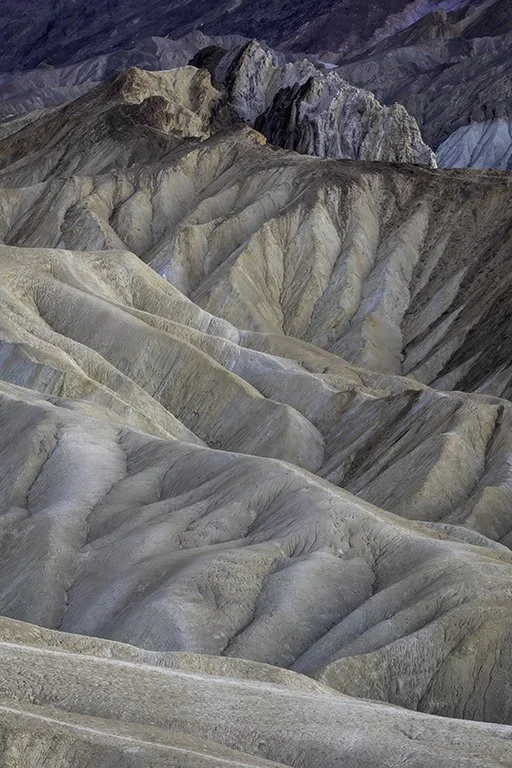
Zabriske Point is a challenge for photographers. Because of the hyper-arid climate, summers are extremely hot, with temperatures regularly exceeding 100 degrees. Accordingly, the best times to visit are October through April. The optimal times for photography are sunrise and the hour after, and late afternoon through sunset. Low-angle sidelight helps sculpt the ridges and saturates color, resulting in beautiful, soft pastels.
20 Mule Team Canyon
It’s the next morning, and we’re up at 4:00 AM to make it to our morning shoot at the 20 Mule Team Canyon. We gather our equipment outside the hotel and head in two vehicles to the east side of Death Valley National Park, near the Old Harmony Borax Works. We arrive at the parking lot and hike with our equipment to a steep overlook where we can set up our tripods and cameras before other tourists arrive.
This area exhibits classic badland morphology, with steeply eroded hills, ridges, narrow gullies, and winding canyons carved into siltstones, clays, and volcanic layers. Over millennia, erosion has formed sharp ridgelines, amphitheaters, and sinuous drainage channels.
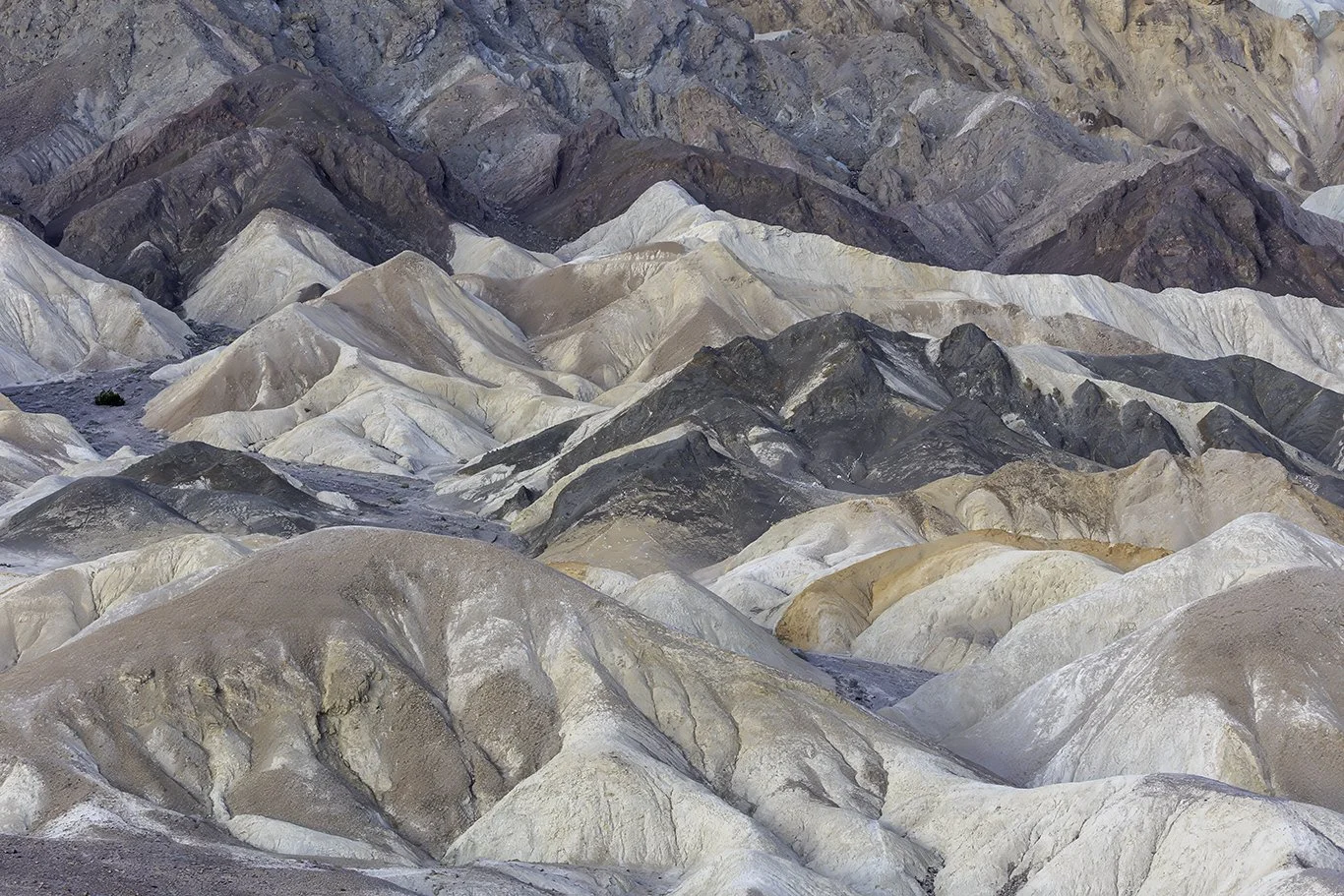
The history of this area is quite interesting. In the 1880s-1890s, the famous 20-mule teams hauled borax from the Harmony Borax Works at Furnace Creek to the railroad at Mojave. The borax industry was central to Death Valley’s Euro-American industrial economy.
This canyon had been used by the Timbisha Shoshone tribe for more than 1,000 years until the Death Valley National Monument was established in 1933. By the late 19th century, borax operations brought industrial mining, wagon roads, and the iconic mule-team era, which shaped regional settlement and storytelling.
It is light out now, and we begin blue hour shooting before sunrise. It is windy today, and no matter how many times I try to secure my hat, it blows off my head and settles in a steep gully about thirty yards from our perch. This is a problem because it is hot and sunny in Death Valley, and no hat means scalp burn and overheating. Matt, our professional group leader, tells me to make our photographs now while the light is good, and we’ll deal with the hat later.
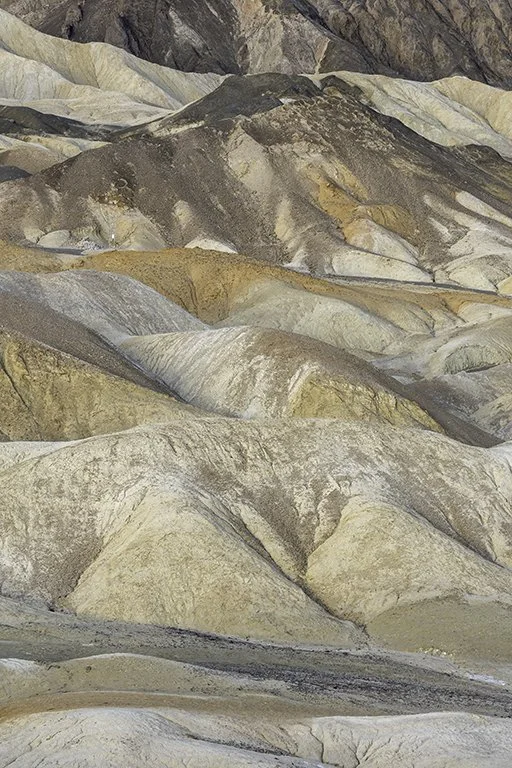
My photographs today are all taken with a 400mm lens to focus on the canyon's topography. As the sun rises, beautiful, thinly bedded sediments rich in iron and clay minerals produce vivid banding. The terrain is composed of ochres, reds, pinks, grays, tans, and creams, all accentuated by surface staining and differential weathering.
As we start to lose the light, it’s time to pack up and head out for breakfast, but not before something is done about my misplaced hat. In addition to being a professional photographer, Matt is a prodigious mountain climber, having scaled all of Colorado’s high peaks. He inches his way down the steep ravine, grabs my hat, and climbs back up the ridge without falling and without a rope. I’m forever grateful!
Ibex Dunes
We pile into our vehicles and drive about twenty miles to our camp near the Ibex Dunes. The road, located on the park’s southern border, becomes gravel and quite rugged. Our tents are already pitched for sleeping, and there is a larger tent for gathering and eating. In March, the climate in this area is usually quite pleasant. However, with global warming, temperatures this week are in the 90s, making the long hikes required to reach the dunes challenging.
The goal of the first day is to hike to the dunes for sunset photos. To get there, we trudge about two miles with our camera backpacks in tow, first across a long playa. The surface is quite jagged, composed of sand grains derived from a mix of granitic, volcanic, and metamorphic rocks.
Once through the playa, we reach sand that is easier to traverse. With about 45 minutes to go, the dunes come into view. These dunes are part of a large, wind-driven system that developed as the regional climate dried and the basin-and-range landscape evolved. Over tens of thousands of years, sediments from surrounding highlands, including sand, silt, and finer particles, have been eroded, transported, and concentrated in low-lying basins and along margins where wind speeds drop.
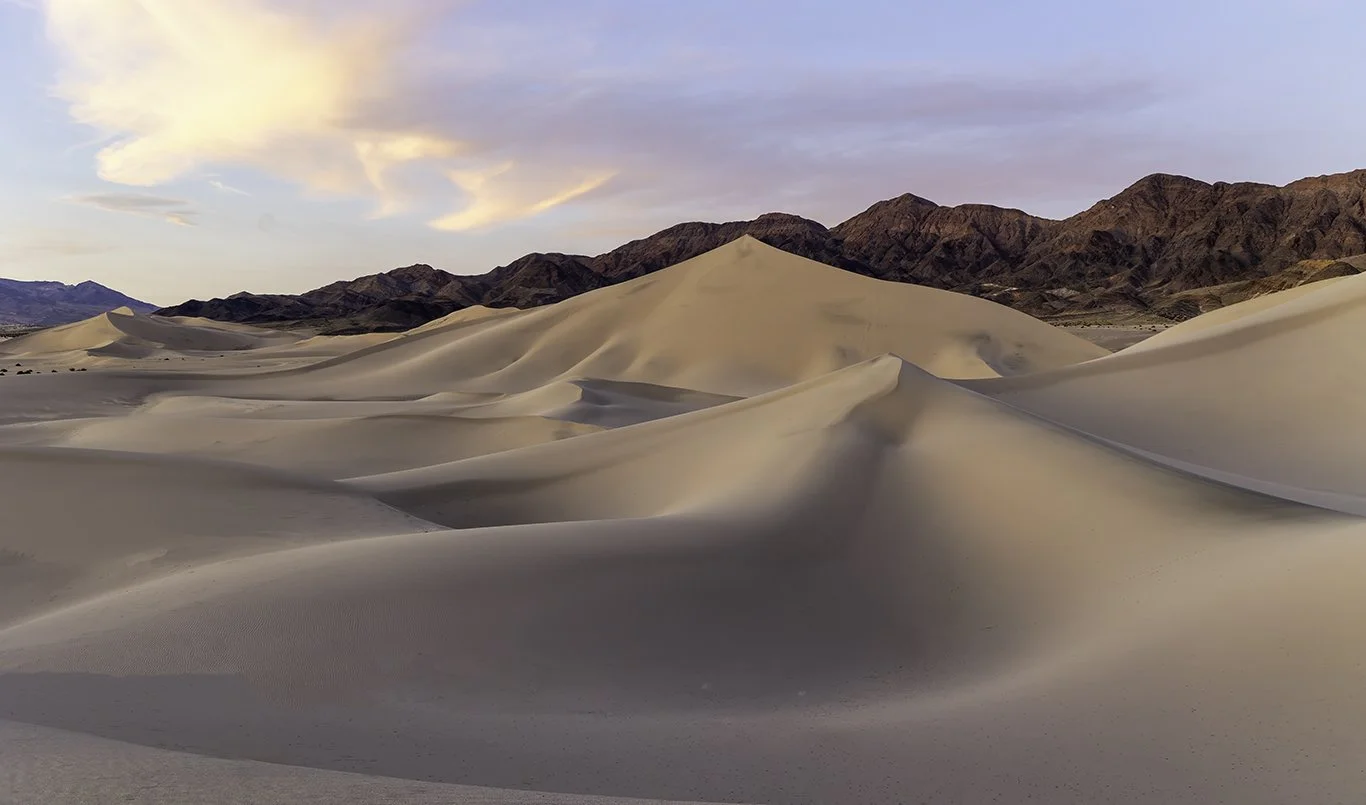
We set up our tripods and are now ready for golden hour. Late-afternoon and sunset light from the west produces rich color saturation and dramatic side lighting on the windward faces. In twilight, the dunes take on an abstract look, with soft tonal gradients and cooler hues.
We trek back to the campsite, have dinner, and hit the sleeping bags for a little rest before our next day’s photoshoot. We leave the campsite at 3:00 AM to reach the dunes for astrophotography. I’m a neophyte at this and get a lot of help from the pros. With special software, Matt has determined the best time and place to photograph the Milky Way. I find this very challenging because, while shooting long exposures in the dark, one must avoid using headlamps to see. Going by sense of touch, you have to know your camera extremely well. To get competent at this, I’m told there are workshops devoted to astrophotography. I guess this discipline is for people who do not need much sleep!
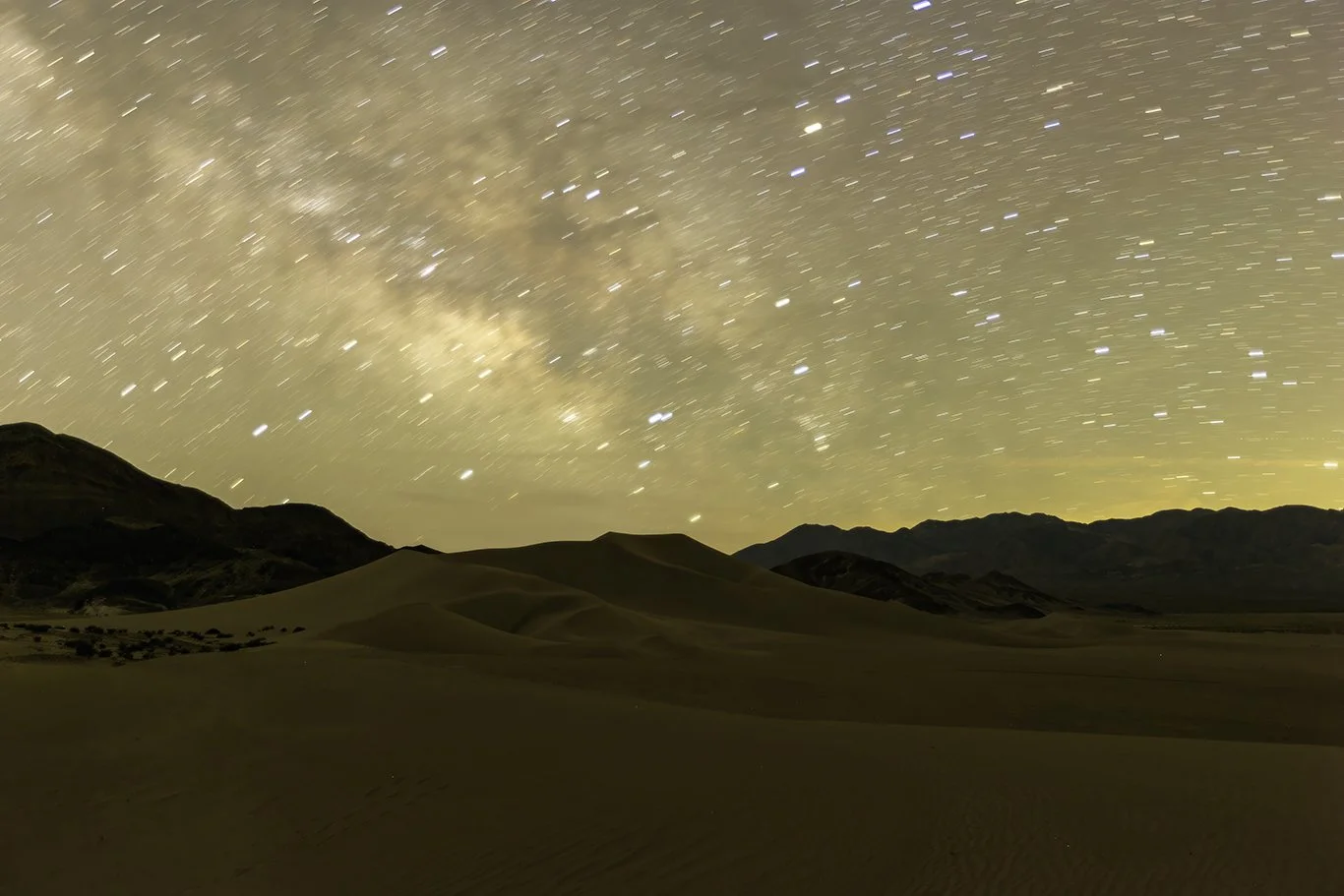
It is starting to get light out as we have entered blue hour. We plod through the sand to set up for our morning dune shoot. Sunrise brings low, warm light from the east that sculpts ripples and casts long shadows across the lee sides of dunes. The lighting is perfect for bringing out a beautiful variety of forms, including small, curving crescent ridges and wind-scoured ripples that change character dramatically with the sun and the wind.
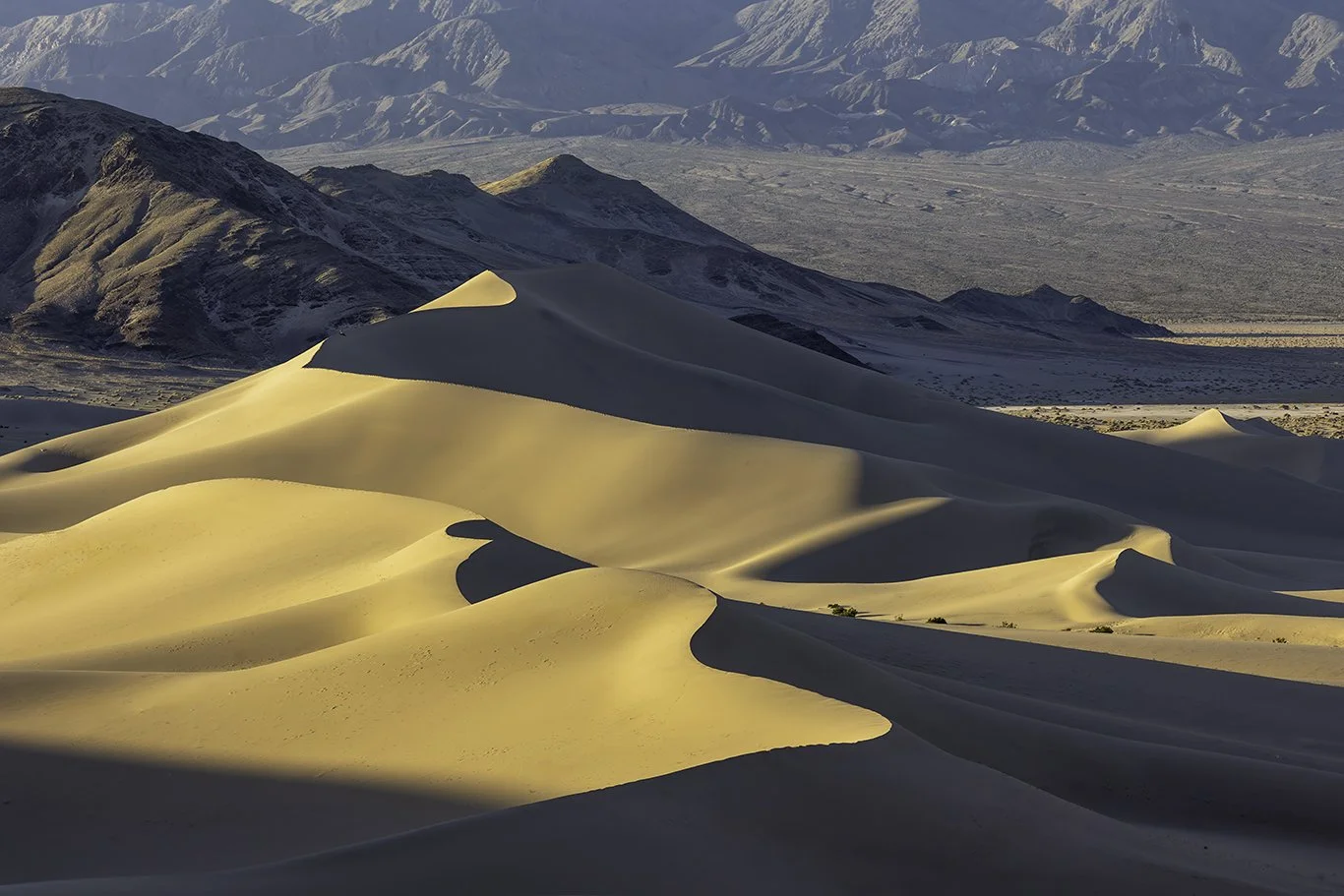
I’ve loved photographing the Ibex Dunes. However, after two nights of camping in ninety-degree heat, I’m ready to head back to the motel for a shower.
Dante’s View
We’re nearing the end of our survey of Death Valley, and we head to Dante’s View for our twilight shoot. Perched at 5476 feet above sea level, we reach the parking lot in the Black Mountains, offering a panoramic view of Death Valley below. From this overlook, both Badwater Basin and the Panamint Range are in view.
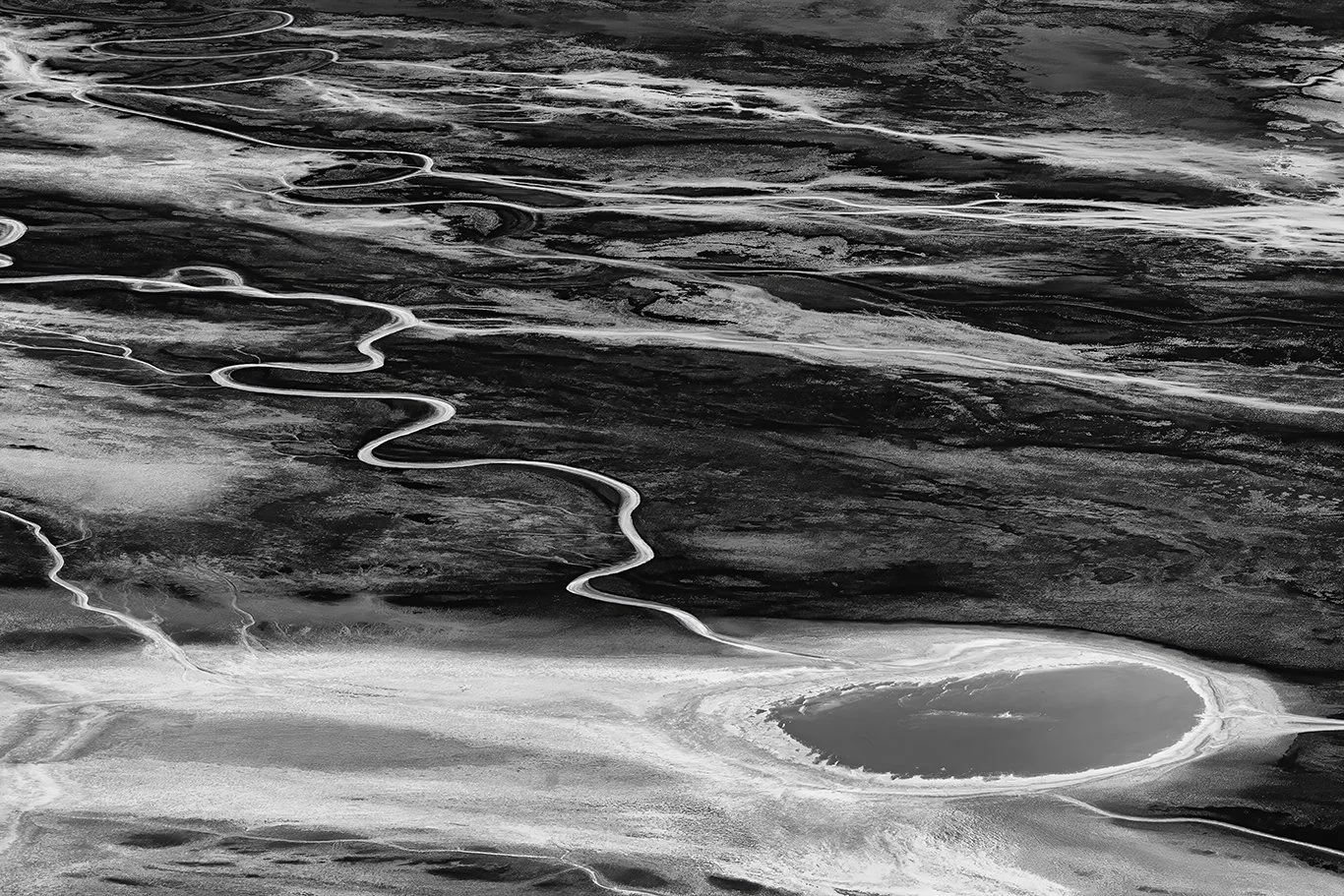
While long known to indigenous peoples, the site was adopted by Euro-American visitors in the early 20th century as Dante’s View, invoking Dante’s Inferno imagery of the valley below. The outlook became increasingly popular as auto access improved between the 1920s and 1950s.
We hike along a narrow ridge to stake out a good photographic vantage point. However, as sunset approaches, we have to move and change our spot because the group is being feasted upon by some kind of biting insect. Fortunately, the second site is much better.
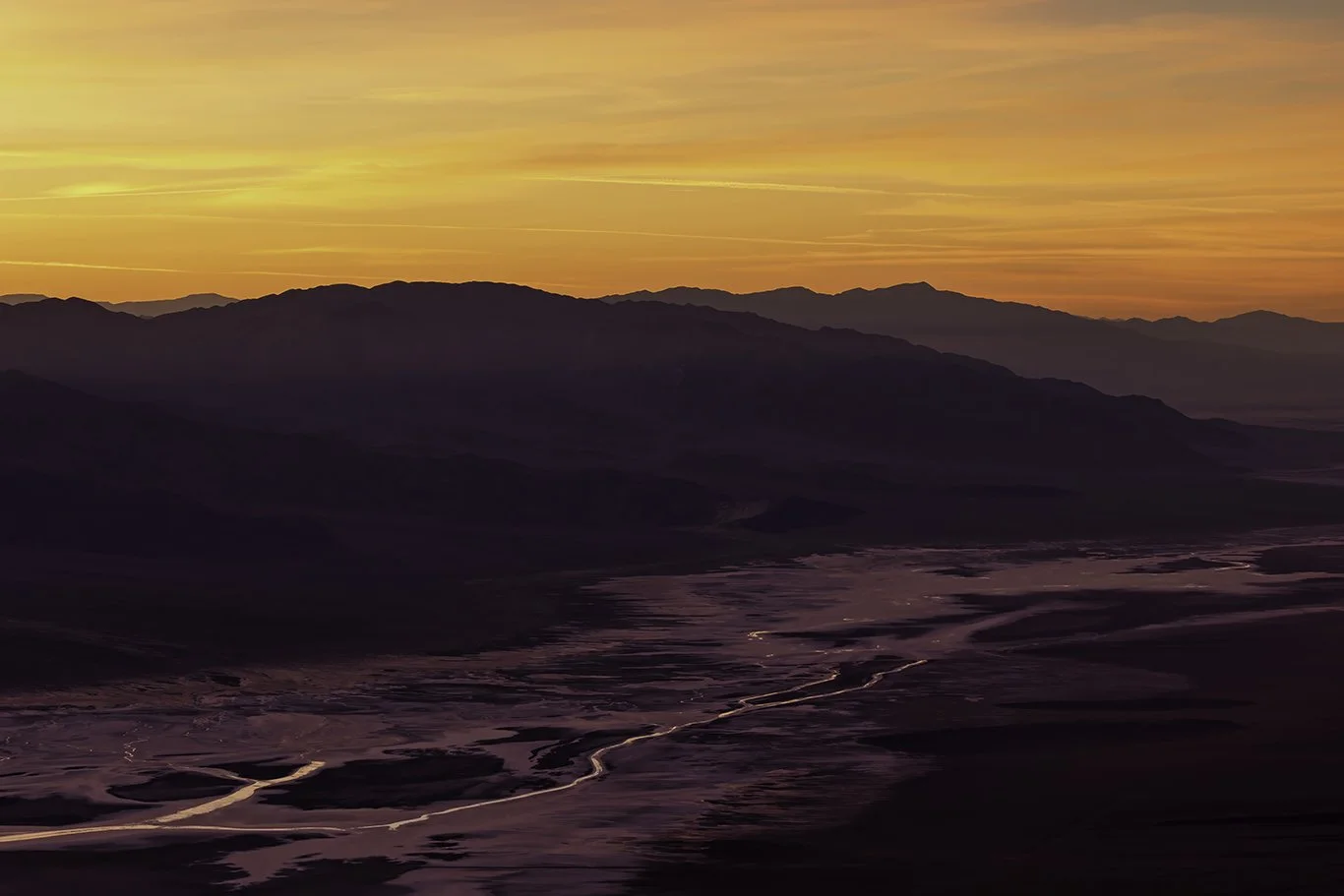
The topography of this area is amazing. From our perspective, we see tiered geomorphic surfaces and nearby steep Black Mountains slopes. To the west lie the flat Badwater playa and the rising Panamint Range. The valley below collects sediments from the surrounding ranges, which have coalesced over time into alluvial fans and playa deposits. During the Pleistocene era, wetter intervals produced larger lakes on the valley floor. As the climate became hyper-arid, evaporation led to salt-crust development. The net result is what we see today, with opportunities for wide-angle panoramas and foreground-to-distant detail, as well as telephoto shots for compressed layers and isolated mountain bands.
My time in Death Valley is coming to a close. In five days, we’ve covered many of the highlights this great park offers. However, I realize there’s so much more I haven’t seen. I’ve had the same feeling when I’ve left many other places around the world during my travels. When I get home, I will finish processing my photos, update my website, and start planning my next trip.


